Beyond On-Demand: A More Reliable Approach to Video Remote Interpreting (VRI)
Scheduled video remote interpreting gives courts and healthcare systems what on-demand can’t: preparation, consistency, and interpreters who show up ready.
Table of Contents
When a Deaf patient sits down with a doctor or a defendant faces a judge, video remote interpreting may be what makes communication possible. The interpreter isn’t an add-on. They’re the reason communication happens at all.
Most people never think about how American Sign Language (ASL) interpretation gets delivered until something goes wrong. A phrase gets mangled in a medical consult, or a witness’s answer lands differently than intended. By then, the damage is done.
And now, the stakes have never been clearer.
In February 2025, the Department of Justice settled with a Georgia hospital after a Deaf patient alleged she was denied an ASL interpreter during labor and delivery, forcing her to rely on lip reading while medical staff handled a delivery complication.
A year earlier, a Kansas hospital compensated a Deaf man who spent five days hospitalized without a sign language interpreter, unable to communicate with his medical team.
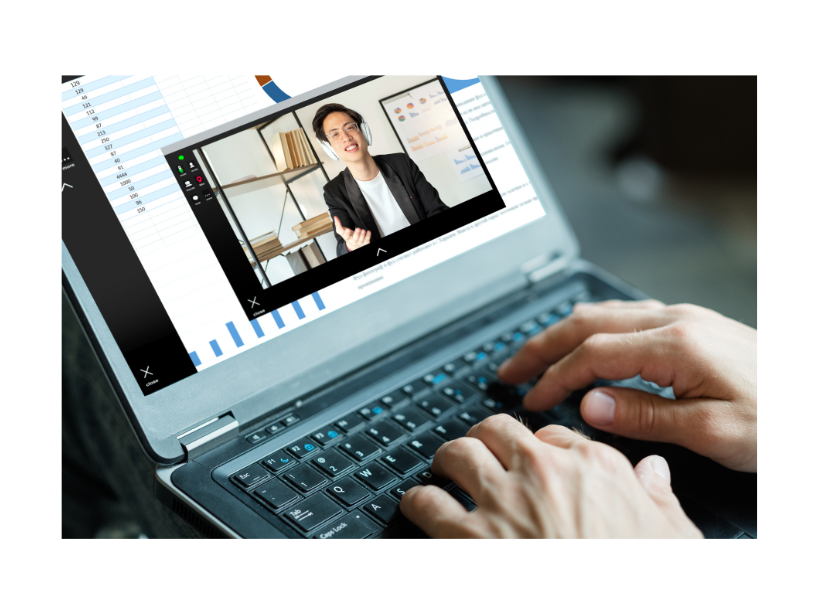
In scheduled video remote interpreting (VRI), preparation and expertise ensure that every sign carries the intended meaning.
When Accuracy Matters, Preparation Comes First
These aren’t isolated incidents. A nationwide survey found that only 41% of deaf people who used VRI were satisfied with communicating through the service. Such a gap often stems from one issue: preparation.
And in November 2025, a federal court ordered the White House to restore ASL interpreters for press briefings, with the judge emphasizing that “ASL and written English are distinct languages” and that captions alone don’t provide meaningful access for many Deaf Americans.
In these moments, scheduledvideo remote interpreting (VRI) isn’t just a convenience, but the necessary support structure.
For high-stakes institutions operating under scrutiny how interpreting is delivered matters as much as whether it happens at all. More of these organizations are choosing scheduled video remote interpreting over on-demand options. The reason? Not because scheduled is always faster, but because it’s defensible.
What Is Video Remote Interpreting?
Video remote interpreting (VRI) connects Deaf and Hard-of-Hearing individuals with professional interpreters through secure video technology. It enables real-time communication when participants aren’t in the same room.
When people ask aboutvideo remote interpreting (VRI), they usually picture speed and instant access.
But VRI isn’t one thing. Two distinct models exist, and they produce very different outcomes.
VRI technology connects Deaf individuals with professional interpreters for clear communication in healthcare, legal, and institutional settings.
How Video Remote Interpreting (VRI) Works
A video remote interpreting service uses internet-connected devices, usually, dedicated VRI equipment, to link interpreters with clients in real time. The interpreter sees and hears all participants. They provide ASL interpretation or other accessibility services through the video feed.
This setup allows organizations to access qualified interpreters regardless of geography. Rural hospitals can connect with specialists. Courts in smaller jurisdictions can find interpreters with specific legal expertise. The technology removes distance as a barrier.
Legal proceedings rely on accurate communication. Scheduled video remote interpreting (VRI) helps ensure that Deaf participants can fully engage in court hearings, depositions, and other legal processes.
Scheduled VRI vs. On-Demand Video Remote Interpreting
On-demand video remote interpreting optimizes for immediacy.
With scheduled video remote interpreting VRI services, appointments are arranged in advance. This sometimes happens days ahead, and sometimes within 24 hours. That lead time isn’t wasted. It’s used for preparation:
Assigning the right interpreter for the context, e.g., custody hearing, oncology consult
Many on-demand services connect you with whoever happens to be available. The interpreter might be skilled. However, they might also be unprepared for the context. In high-risk environments, that gap can mean the difference between a successful proceeding and a legal liability.
When Interpretation Becomes Evidence: VRI in Legal Settings
In legal settings, interpretation doesn’t sit on the sidelines. It enters the record.
As all happens in real time, a mistranslated phrase can’t be corrected later. A flawless transcript won’t fix flawed interpretation. Once the moment passes, any damage is locked in.
Criminal Court Proceedings
Accurate communication in court is critical. Video remote interpreting (VRI) helps ensure Deaf participants can engage fully in legal proceedings.
The stakes are liberty and sometimes life. Every word a defendant speaks and every word spoken to them goes into the official record.
Interpreters must keep up with quick exchanges between attorneys, witnesses, and judges, remaining accurate under pressure. A misunderstood question during cross-examination can become grounds for appeal.
Scheduled VRI lets courts assign interpreters with criminal law experience before the proceeding starts.
Family Court Hearings
Custody disputes, protective orders, and child welfare cases require sensitivity. These proceedings decide who raises children and who gets to see them.
Testimony is personal and often emotional. Parents describing abuse, children recounting trauma, caseworkers presenting findings: none of it tolerates interpretation gaps.
These hearings demand interpreters who can stay professional while accurately conveying hard-to-hear facts.
Immigration Matters
Immigration proceedings need interpreters who understand legal terminology and cultural context.
In such cases, many respondents have no lawyer. The interpreter may be the only person in the room focused solely on accurate communication.
Video remote interpreting (VRI) supports accessible communication during government and administrative services.
Administrative Law Hearings
Disability benefits, unemployment appeals, and licensing disputes may lack the drama of criminal court but carry real consequences. Consequences include whether:
Someone gets the support they need
A person keeps practicing their profession
A bureaucratic decision gets overturned
Interpretation errors can mean a denied claim that takes months to re-hear.
Law Enforcement Interviews
Before anyone is charged, and sometimes before anyone is arrested, interpretation shapes the investigation.
Witness interviews, interrogations, victim statements: all of it feeds into decisions about who gets charged. Recorded interviews become evidence. Defense attorneys will pick apart every exchange.
An interpreter without law enforcement experience may miss when a detective’s phrasing is intentionally vague, or when a response carries meaning beyond the literal words.
Video Remote Interpreting in Healthcare Settings
Medical appointments move fast. A symptom gets described once. Instructions are given once.
Video remote interpreting healthcare services support patient safety and clinical clarity. When services are scheduled, interpreters can prepare for medical terminology, provider workflows, and sensitive conversations.
Doctor's Appointments
Remote medical consultations allow patients to speak with healthcare professionals from anywhere. Video remote interpreting (VRI) can ensure Deaf and Hard of Hearing patients clearly understand symptoms, treatment advice, and medication instructions.
During a doctor-patient dialogue, a patient describes chest pain, and the doctor asks about duration, intensity, and location. The answers determine whether the patient goes home or heads to the cardiac unit.
Primary care visits, specialist consultations, and post-procedure follow-ups are stressful and often urgent. Each needs interpreters who can handle medical vocabulary while keeping pace.
Scheduled VRI lets practices match interpreters to specialties. For instance, oncology appointments get interpreters who know cancer terminology. Neurology visits get interpreters who understand the difference between a seizure and a stroke.
Clear communication during medical appointments is essential. Video remote interpreting (VRI) helps ensure Deaf and Hard of Hearing patients can fully understand diagnoses, treatment options, and care instructions.
Care Team Meetings
When multiple providers coordinate treatment, patients and families need to be part of the conversation alongside doctors, nurses, social workers, and therapists.
These meetings often involve hard decisions:
Whether to pursue aggressive treatment
How to manage conditions at home
What to do when curative care is no longer working
The ASL interpreter isn’t just translating words. They’re helping a family understand information that will shape how someone lives. Preparation matters here.
Intake and Discharge Discussions
The intake visit sets the foundation, drawing conclusions about allergies, medications, medical history, and emergency contacts. Miss something, and it follows the patient through their entire stay.
Discharge is just as important. Patients leave with instructions for wound care, medication schedules, and warning signs that should bring them back to the ER.
Misunderstandings at discharge drive preventable readmissions. Scheduled interpreting makes sure these conversations get proper attention.
Internal Hospital and Clinic Meetings
Not every interpreted conversation involves patients.
Hospitals employ deaf staff. Deaf or Hard-of-Hearing nurses and other medical staff also need access to departmental meetings, training sessions, and policy updates.
These internal meetings are often scheduled well ahead, making them a natural fit for scheduled VRI. Consistent interpreter assignments build familiarity. A professional ASL interpreter who regularly covers nursing meetings learns the shorthand and ongoing concerns.
Hospitals often rely on scheduled video remote interpreting (VRI) to support clear communication during internal meetings, care coordination discussions, and administrative briefings involving Deaf or Hard of Hearing staff.
Mental Health Sessions
Therapy depends on nuance. A patient’s word choices, their hesitations, the emotions underneath—all of it matters clinically.
Interpreters in mental health settings need training to handle discussions of trauma, suicidal thoughts, and addiction without adding their own spin.
The therapeutic relationship takes time to build. Having the same interpreter across sessions supports that continuity.
Moving Away from On-Demand VRI? Here Is What to Consider
On-demand video remote interpreting looks flexible on paper. But flexibility without structure creates exposure.
Common Problems with On-Demand Services
The recurring issues include:
Inconsistent interpreter qualifications – no guarantee of relevant expertise
Zero preparation time – interpreters arrive cold to complex situations
No continuity – different interpreter every session
Technology failures – no pre-session testing
For institutions, this translates to last-minute scrambling, ADA compliance uncertainty, and uneven service quality.
How Scheduled VRI Solves These Problems
Scheduled video remote interpreting VRI services address these problems structurally. A well-thought-out and planned process replaces improvisation.
Organizations know who their interpreter will be. That interpreter has time to prepare. Technology gets tested before the session matters. If something goes wrong, there’s time to fix it.
Scheduled video remote interpreting (VRI) sessions allow interpreters to prepare in advance, ensuring clear and accurate communication for legal, healthcare, and institutional meetings.
ADA Compliance and Video Remote Interpreting
Most organizations discover ADA compliance gaps only after something breaks. By then, they’re already exposed.
Compliance works when it’s built into systems from trusted providers. Handling it case by case is an unacceptable risk.
Building Accessibility into Operations
ADA compliance is a persistent concern, but it’s also an opportunity. Accessibility packages let you meet legal obligations while opening doors to the Deaf and Hard of Hearing community, a significant demographic that’s often underserved.
Structured accessibility packages bundle scheduled video remote interpreting (VRI) with other services. These packages reduce risk while expanding access.
Standard packages typically include:
Priority interpreter access
A dedicated client relationship manager—no repeat explanations, no re-sending prep materials
ASL interpreting and live CART captioning in English, Spanish, Portuguese, French, and other languages
ADA compliance reporting
Transcripts for documentation
Service-level guarantees
Tech support
The payoff: consistency you can document, and access you can prove.
Choosing the Right Video Remote Interpreting Providers
Not all video remote interpreting companies are built for institutional environments.
When evaluating video remote interpreting providers, look past availability and ask harder questions.
Questions to Ask VRI Providers
Preparation phase:
How do you ensure ASL interpreters are specialists in the context?
What information and preparation do interpreters receive before sessions?
How much lead time do you need?
ASL interpreter’s qualifications:
What certifications do your interpreters have?
Do you have specialists for legal, medical, or mental health settings?
How do you verify ASL interpreter credentials?
Continuity of service:
Can we ask for the same interpreter for recurring appointments?
How do you handle interpreter unavailability?
What’s your backup process? What happens when an interpreter cancels last-minute?
Accountability:
Who do we contact when something goes wrong?
What are your service-level guarantees?
How do you handle complaints?
Why Scheduled Video Remote Interpreting Is Becoming the Standard
For courts, healthcare systems, and government agencies, interpretation touches more than communication. It touches rights, outcomes, and permanent records.
Scheduled video remote interpreting (VRI) is the default.
Errors aren’t tolerable, and not because it’s the cautious choice: it’s the only one that holds up under scrutiny.
To get this right, treat interpretation as infrastructure, not accommodation. Build it into your systems. Prepare for it and document it.
And when something goes wrong, as it sometimes will, you have processes that can withstand review.
Lessons From 45 Years in Courtrooms and Legal Proceedings
Karasch has spent more than 45 years working within the judicial system, where every interpreted word can end up in testimony, on the record, and under appeal. That background is reflected in how we approach every assignment—legal or otherwise.
We’re family-owned. Accountability isn’t abstract here; there’s no platform to hide behind, no faceless queue. When something goes wrong, it’s our name on the line.
Court-level precision means assigning interpreters who can hold up under scrutiny—not just whoever’s available at the moment. It means understanding that when meaning shifts, records shift. And in legal environments, that’s not a service quality issue. It’s a due-process issue.
Karasch’s 45-year track record in court reporting and stenographic services for legal proceedings has built us a rich legacy in the legal industry.
The same discipline applies in healthcare and government settings. Compliance doesn’t happen by accident. It has to be designed, implemented, and documented—every time.
If you are evaluating scheduled video remote interpreting services for your institution, contact Karasch to discuss your requirements and compliance considerations.